← All articles
Volumetric weight: why you pay for more than your parcel weighs (and how to save)
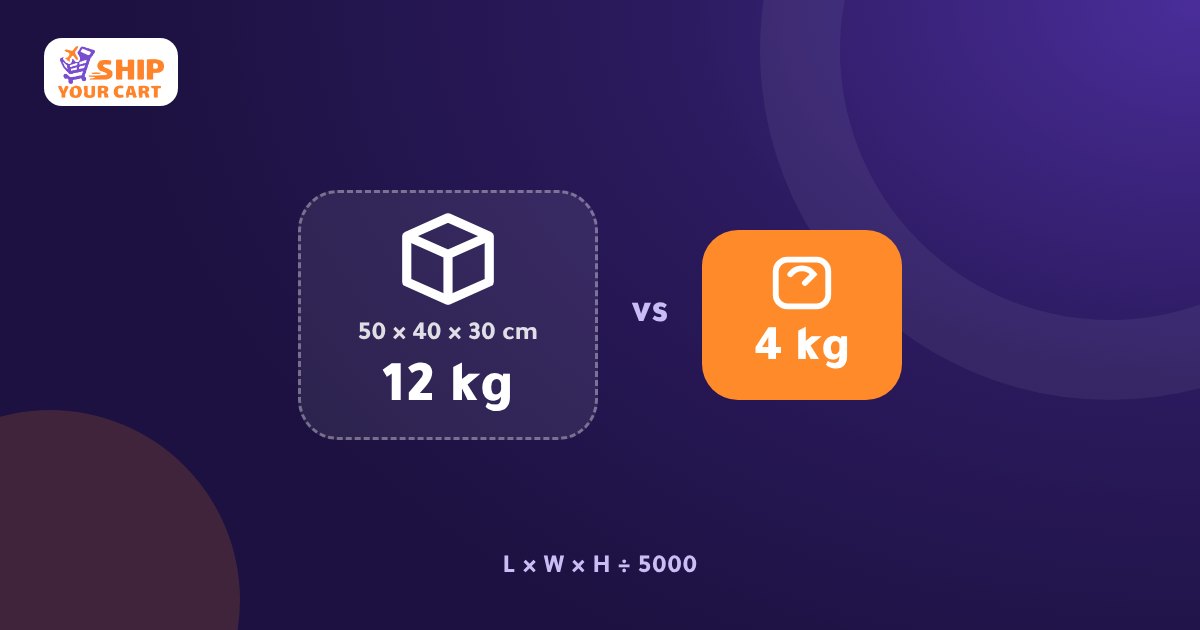
You ordered a pillow or a pair of shoes in a big box. The parcel weighs 4 kg, but the shipping price is for 12 kg. That is volumetric weight. Here is how it works, and how to pay less.
What is volumetric weight?
Air carriers such as Aramex and DHL do not charge by real weight alone, because a big light box takes as much space on the plane as a heavy one. So they work out two weights and charge the higher one:
- Actual weight: what the scale shows.
- Volumetric weight: worked out from the box size.
How to calculate it
Length × Width × Height (cm) ÷ 5000 = volumetric weight (kg)
Example: a 50 × 40 × 30 cm box:
50 × 40 × 30 = 60,000 ÷ 5000 = 12 kg
If it really weighs 4 kg, you are charged for 12 kg.
What does that cost?
With our current door-to-door prices to Saudi Arabia:
| Case | Charged weight | Price |
|---|---|---|
| Store's big box, 50×40×30 | 12 kg | RM 644 |
| Repacked into a 40×30×25 box | 6 kg | RM 409 |
| If only actual weight counted | 4 kg | RM 307 |
Prices are examples and can change. The calculator below always shows the exact price.
5 ways to save
- Repacking: we remove extra boxes and pack your items in a box that fits. It is included with Shop & Ship.
- Combine your orders: 3 orders in one box cost far less than 3 parcels. The first kilo is always the most expensive one.
- Watch out for bulky items: pillows, big toys and empty bags take a lot of space for little weight.
- Check before you buy: enter the rough weight and box size in the calculator.
- Small, heavy items ship best: coffee, raw materials and accessories are dense, so you do not pay to ship air.
Check your shipping price now
Enter the weight, then open "Box size" to see the charged weight: